The Family Tree
The spine below is the direct line, father to son, from the 1737 crossing to today. Click any row for that person's record — parents, siblings, wife, children — followed by the facts as researched so far. An underlined name carries the direct line to the next row. “Unknown” is a blank still to be filled.
Parents
- Unknown
Siblings
- Unknown
Wife
- Unknown
Children
- Johan Heinrich “Henry” Kratzer (likely)Born ?Germany 15 Jan 1719Died Pennsylvania 28 October 1778
Born near Heidelberg, in the Rhineland-Palatinate. Left at twenty-seven, during the great wave of Palatine emigration that followed a war which had killed a third of the region's people — traveling weeks down the Rhine to Dover, then six to ten more weeks across the Atlantic aboard the Snow Molly under Captain John Howell, with roughly a hundred and fifty people crowded aboard a ship built for far fewer.
Arrived Philadelphia on 10 September 1737 with his teenage son Heinrich, and signed the oath of allegiance to George II required of every arriving male.
His own burial has never been located. The date above is a reasonable estimate from secondary genealogies, not a confirmed record — one of the open questions this site is honest about rather than papering over.
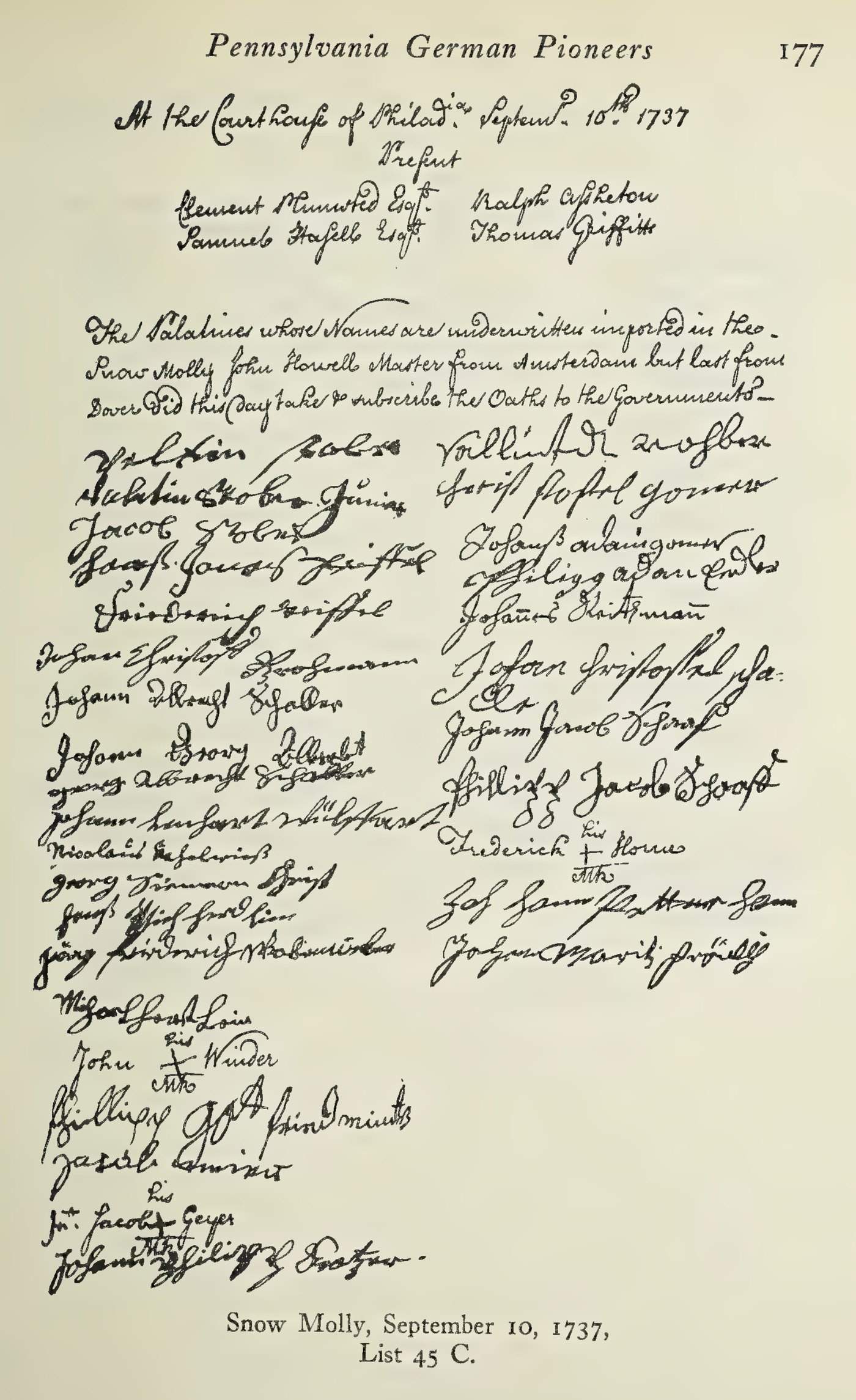
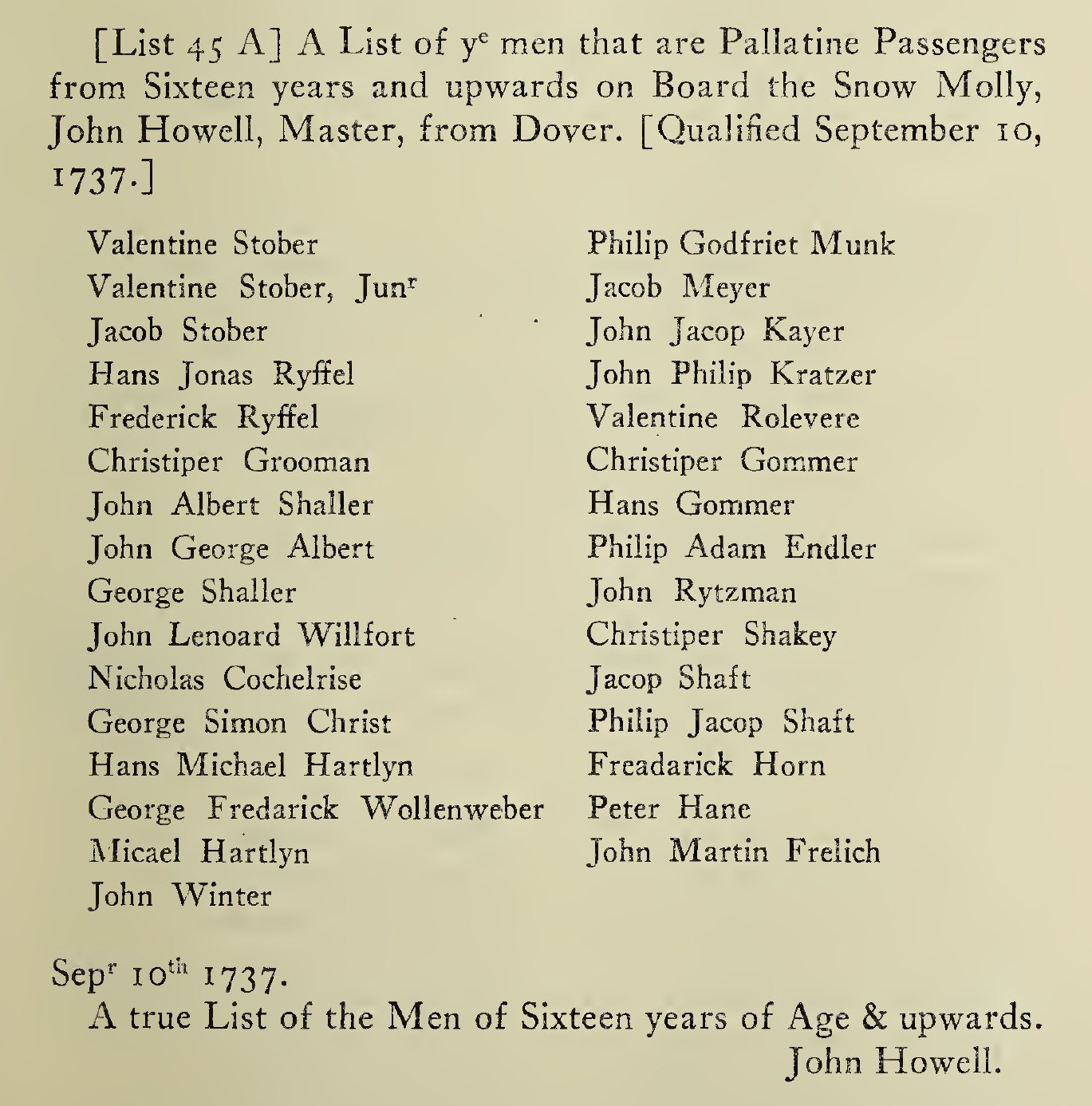
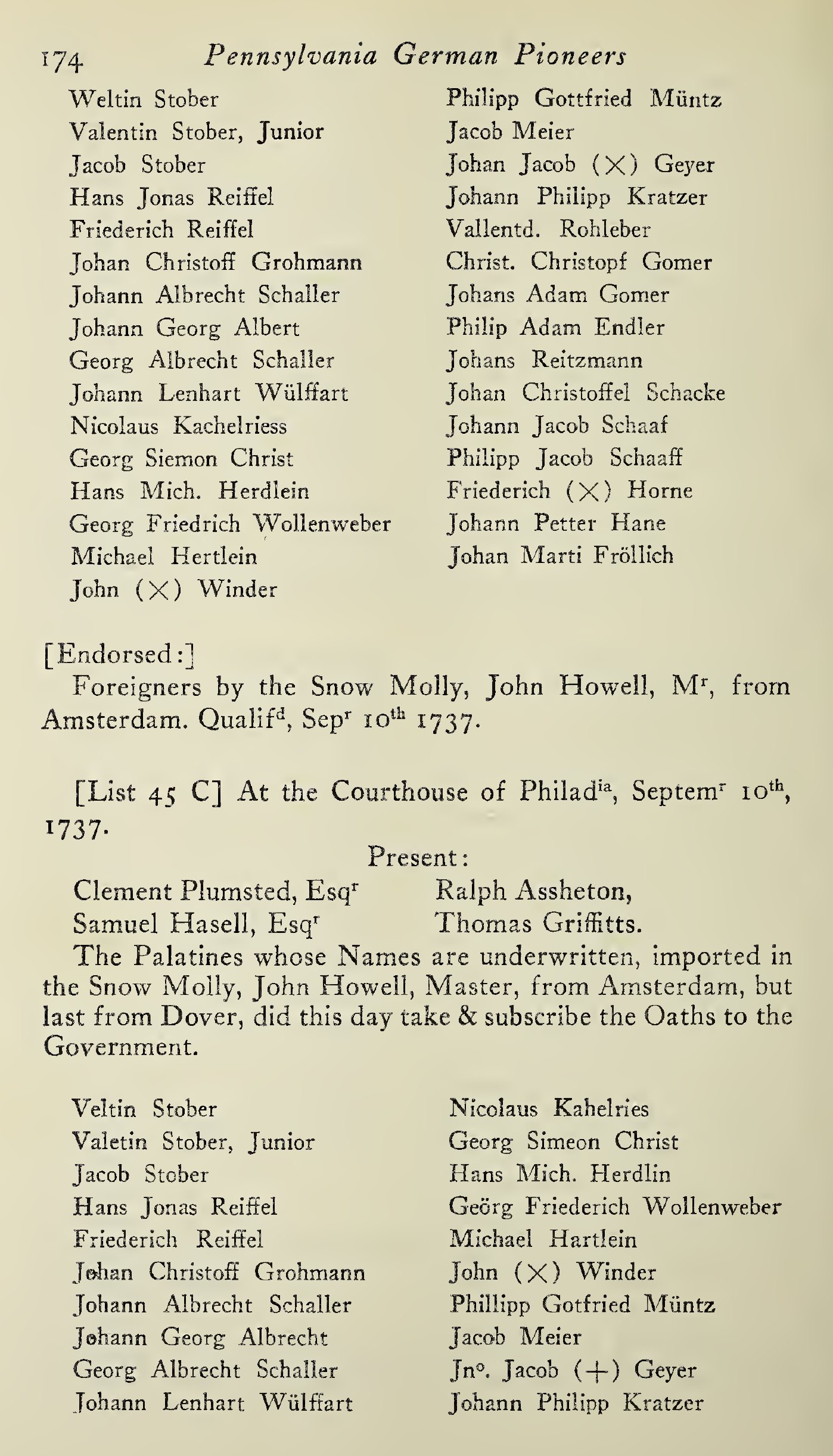
The ship's own paperwork survives in print. Pennsylvania German Pioneers (Strassburger & Hinke, 1934), List 45, gives all three records for the Snow Molly, John Howell, Master, "from Amsterdam, but last from Dover": the captain's list of men sixteen and upwards ("John Philip Kratzer"), the list of those qualified on 10 September 1737 ("Johann Philipp Kratzer"), and the oath of allegiance taken that day at the Philadelphia courthouse before Clement Plumsted, Ralph Assheton, Samuel Hasell, and Thomas Griffitts. Volume II reproduces the signatures on that oath in facsimile. The men who could not write are shown with a mark beside their names; Johann Philipp Kratzer signed his own — the earliest thing in this family's hand that we know of.
Parents
- Johan Phillip Kratzer circa 1695–1788
- Mother unknown
Siblings
- Unknown
Wife #2?
- Elizabeth Fuchs ?dates
Children
- Anthony Krotzer 1755–1821
- Hannah Salome Krotzer Hass 1760–1843
- Johan Philip Krotzer 1763–1841
Wife #1? Not confirmed
- Unknown
Children
- Henry
- Anne Marie
- Nicholas
- Margreth
Crossed as Philipp's dependent teenage son in 1737, not yet eighteen. Settled as a farmer in Northampton County, and appears in the 1772 Proprietary Tax Archives there, taxed two pounds thirty pence that year.
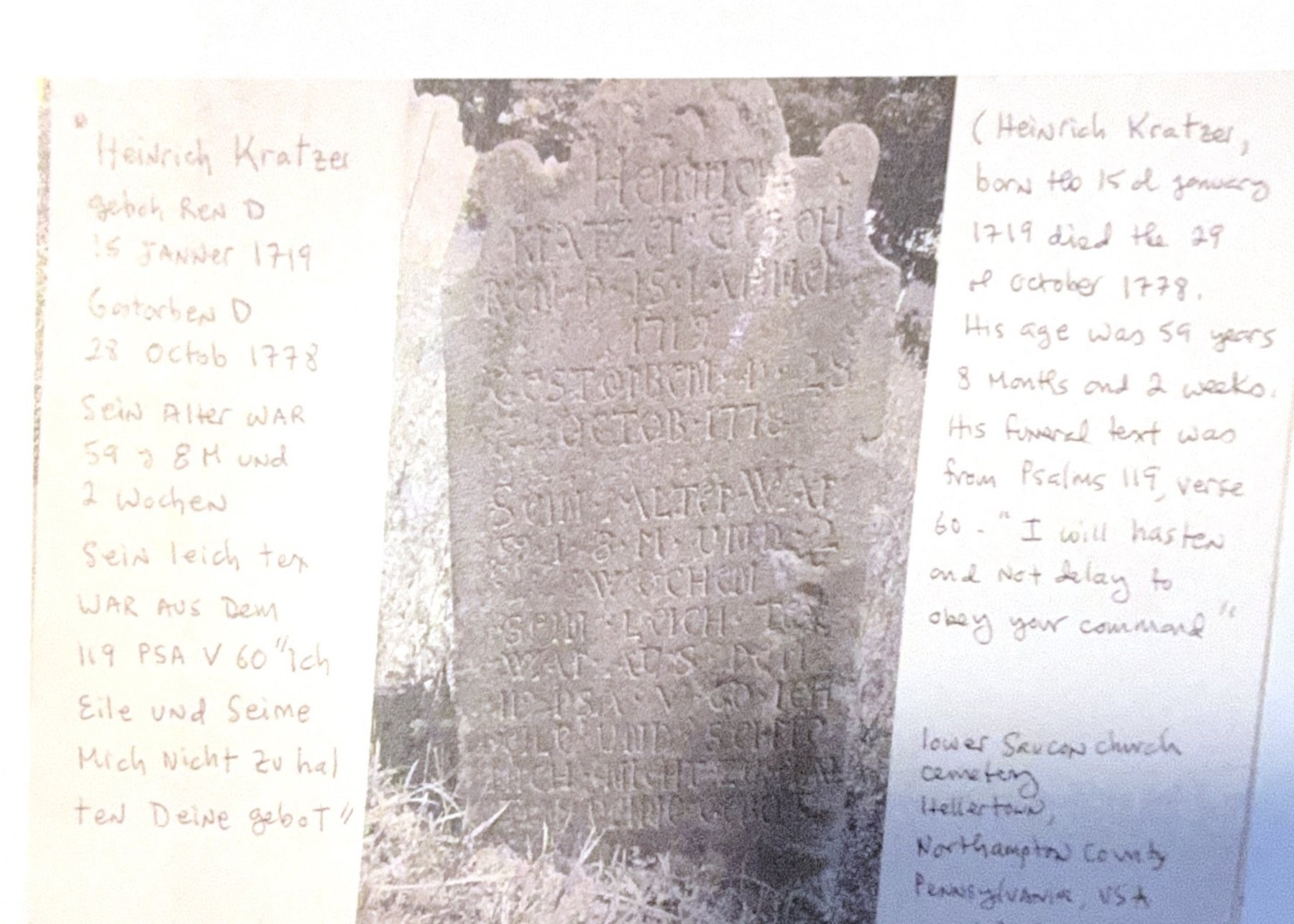
Married Elizabeth Fuchs. His tombstone still stands at Lower Saucon Church Cemetery in Hellertown, near present-day Allentown, inscribed entirely in German. A family member's handwritten translation survives alongside a photograph of it: "Heinrich Kratzer, born the 15th of January 1719, died the 29th of October 1778. His age was 59 years, 8 months and 2 weeks. His funeral text was from Psalm 119, verse 60 — 'I will hasten and not delay to obey your command.'"
Hannah Salome and Philip were still minors when Heinrich died, and were assigned court guardians in an orphans' registry that survives to this day. Curiously, Elizabeth Fuchs herself doesn't seem to have kept custody — an 1800 census lists a "widow Kratzer" living alone in Allen Township, and she never joined the rest of the family when they later moved to Clarion County. Where she went, and why, is one of the open questions this project hasn't resolved.
Could Elizabeth have been the first wife, drifting away from the family as Anthony, Hannah, and Philip came along? An available candidate for second wife is Elizabeth Zierckelsin an unmarried jewish woman who was definitely close to the family. She is godmother to Phillip's son John, baptized November 7, 1790, according to church records.
Parents
- Johan Heinrich Kratzer 1719–1778
- Elizabeth Fuchs ?dates (recorded as his mother; not confirmed)
Siblings
- Anthony Krotzer 1755–1821
- Hannah Salome Krotzer Hass 1760–1843
- Half-siblings, not confirmed: Henry, Anne Marie, Nicholas, Margreth
Wife
- Catherine Jacoby 20 Mar 1768–5 Dec 1840
Children
- Margareth Krotzer b. 3 Jul 1787
- Johan Heinrich “Henry” Krotzer b. 11 Sep 1788
- Johan “John” Krotzer b. 4 Oct 1790
- Johan Abraham Krotzer b. 10 May 1792
Orphaned at fifteen. Emancipated 27 December 1781, at eighteen. His guardian, John Oberly, enlisted him the following April into the 4th Company, 4th Battalion of the Northampton County militia — alongside Oberly himself, and alongside Philip's own brother Anthony, an officer in the same unit. This was after Yorktown, so the family's own account suspects the three of them likely never saw combat — "they didn't know what to expect at the time that they came forward to fight for our independence."
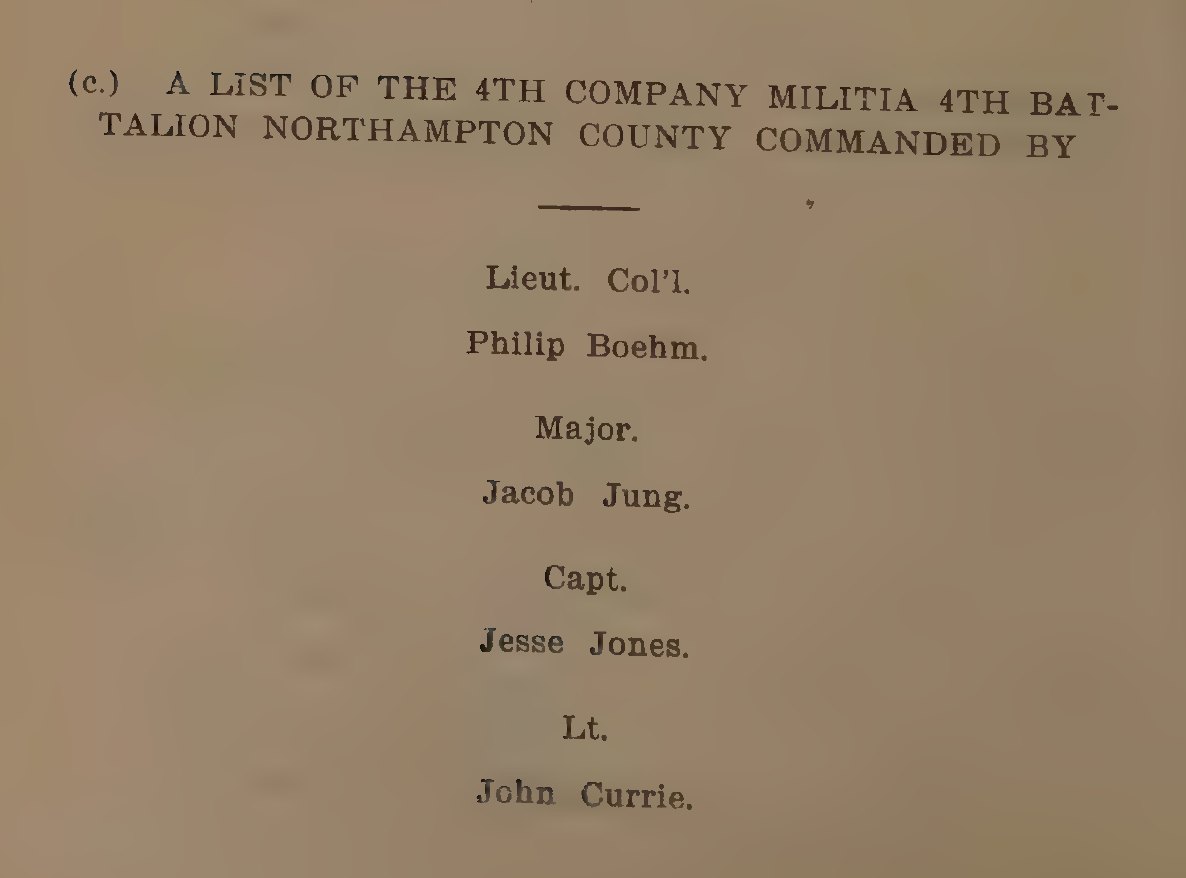
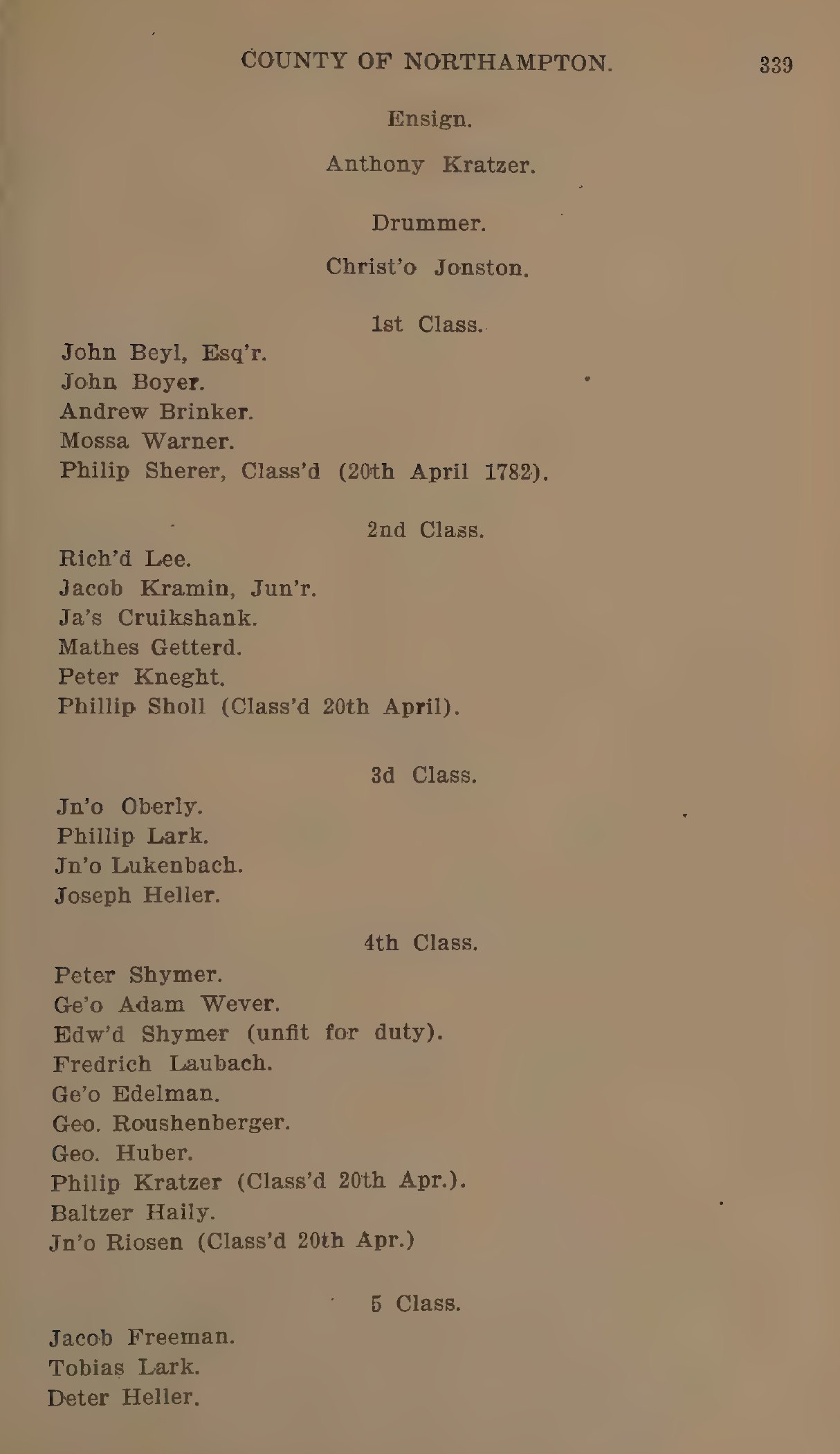
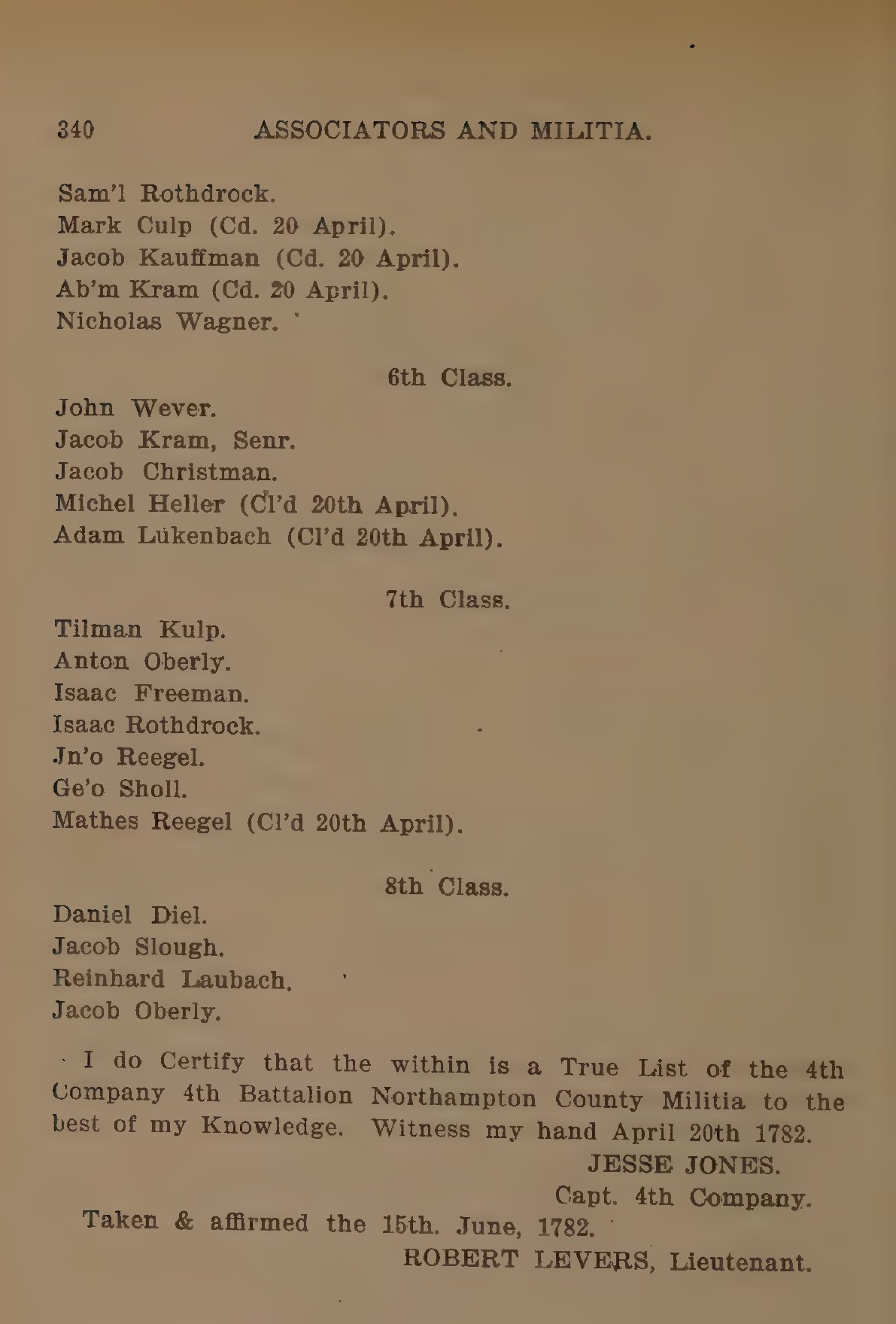
The company's roll survives in print. Pennsylvania Archives, Fifth Series, Vol. VIII (1906), pp. 338–340, gives "A List of the 4th Company Militia 4th Battalion Northampton County" under Lieut. Col. Philip Boehm and Capt. Jesse Jones: Anthony Kratzer is the company's Ensign — the junior officer who carried its colors — John Oberly stands in the 3rd Class, and "Philip Kratzer (Class'd 20th Apr.)" in the 4th, classed into the company on 20 April 1782. Two more Oberlys, Anton and Jacob, are in the 7th and 8th. Captain Jones certified the list "a True List of the 4th Company 4th Battalion Northampton County Militia" that same day.
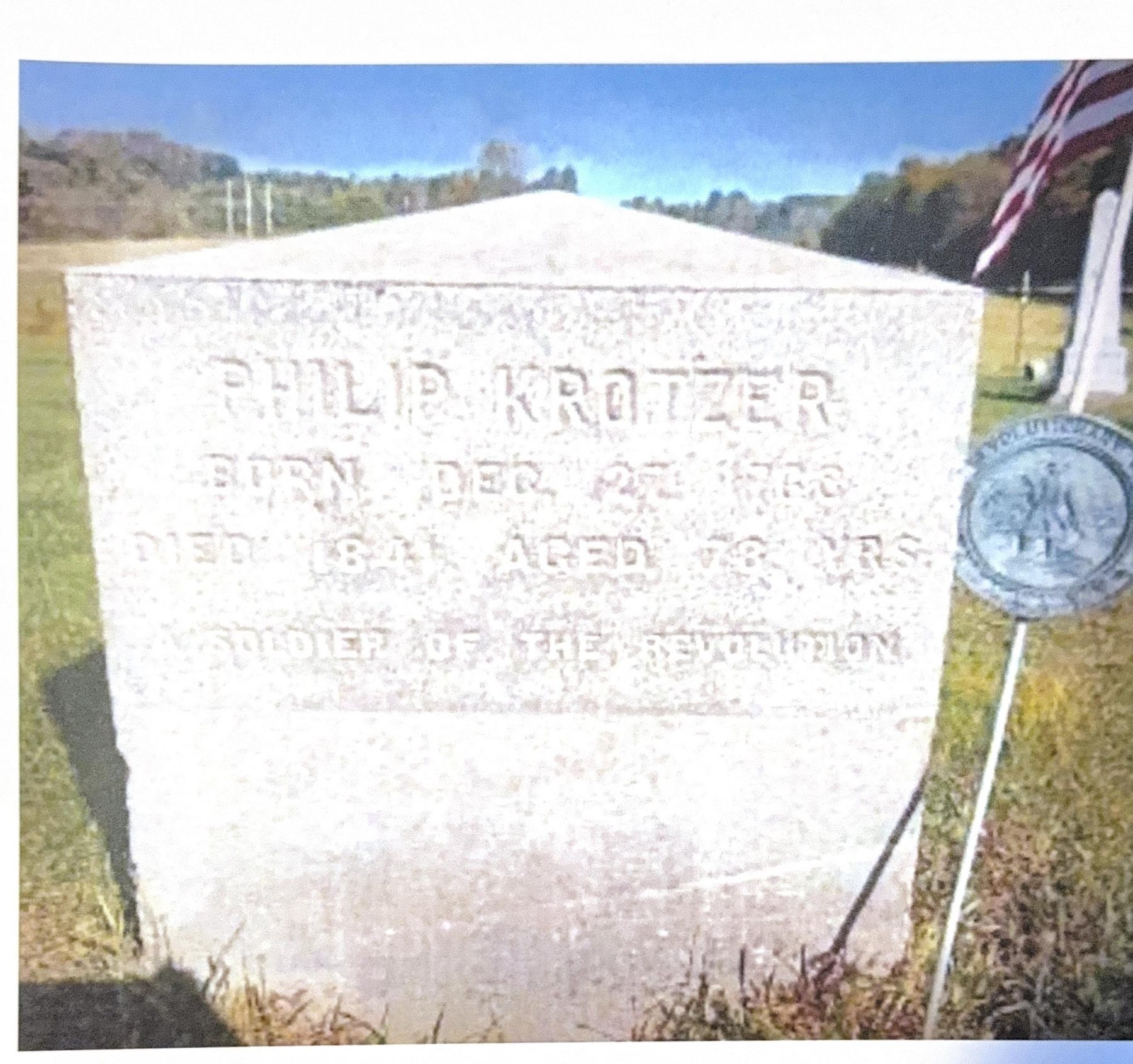
Married Catherine Jacoby; the couple moved to Clarion County after the war. Philip is recognized as a soldier of the Revolution, buried at Churchville Cemetery with a DAR-maintained plaque and flag — which makes his female descendants (through an unbroken female line) eligible for membership in the Daughters of the American Revolution.
Three different men named Philip Kratzer show up in the county records with overlapping dates — which is why two separate burial sites exist in the research folder, one in Clarion County and one in Snyder County under the town name "Kratzerville." In 2018, a research project through the Northampton County Historical & Genealogical Society concluded Clarion County is the correct grave, marked "Soldier of the Revolution."
A second marker stands at his grave: a stone cube inscribed "OUR GRAND PARENTS KROTZER," set with a DAR medallion. The family's research folder captions this photograph as the "Grave stone of Johan Phillip Krotzer, 'soldier of the revolution'" — his own second marker, not a general family-plot marker. See the Photographs page.
Parents
- Johan Philip Krotzer 1763–1841
- Catherine Jacoby 1768–1840
Siblings
- Margareth Krotzer b. 1787
- Johan Heinrich “Henry” Krotzer b. 1788
- Johan Abraham Krotzer b. 1792
Wife
- Anna Mary Rime b. 17 Aug 1784–?
Children
- Phillip Krotzer b. 1811
- Daniel Krotzer b. 8 Apr 1813
- Jacob Krotzer b. 1817
- Julia Krotzer b. 1820
- Reuben Krotzer b. 7 Jul 1826
- William Krotzer b. 1829
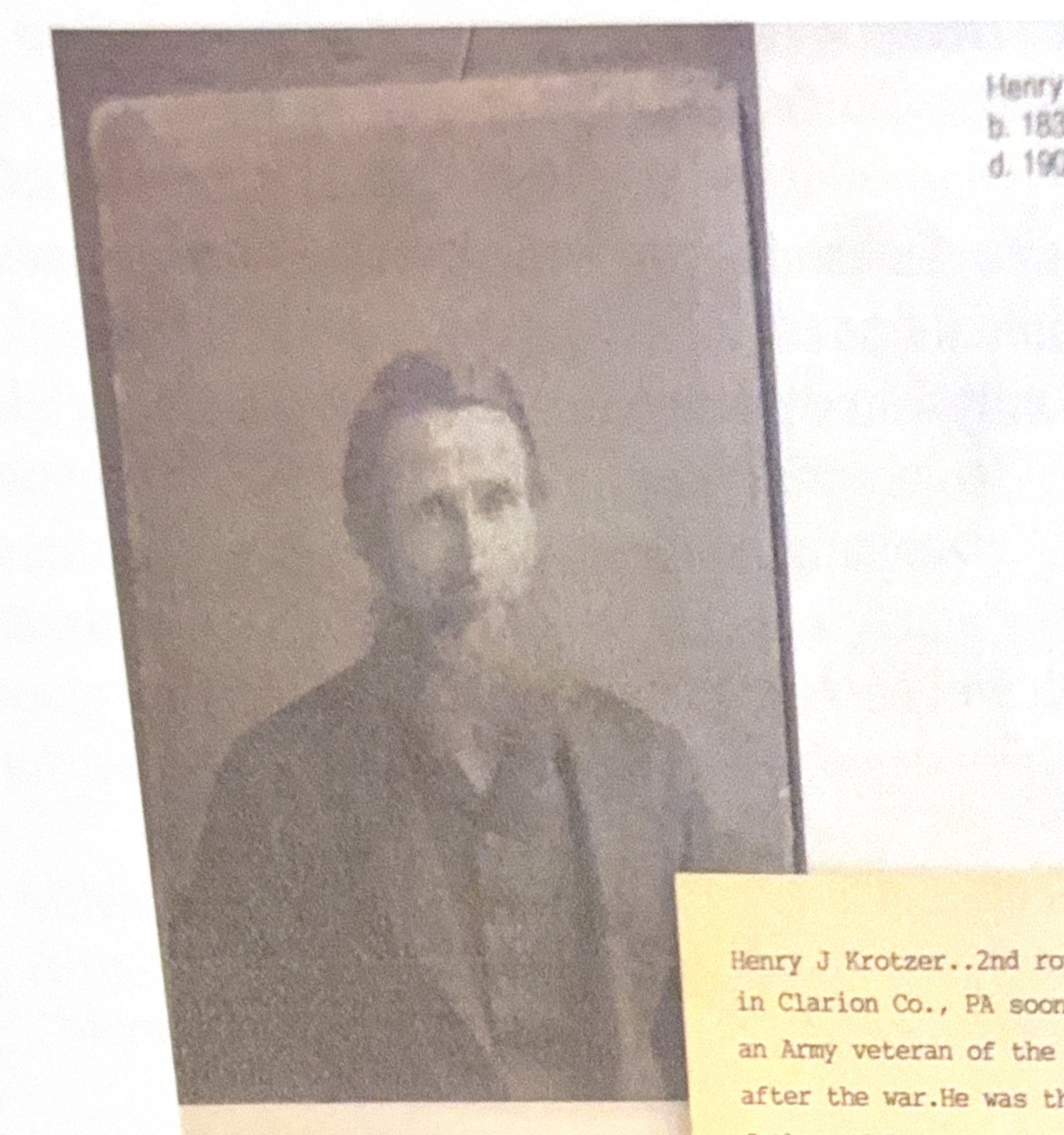
- Henry J. KrotzerBorn 26 Sept 1833Died Winchester, Tennessee 11 Jan 1909
Baptized 7 November 1790 with a sponsor named Elizabeth Zierckelsin. The "-sin" suffix on a name indicated an unmarried woman at that time — and it was customary for a baptismal sponsor to be the child's grandmother, which raises a real question, since Philip's own mother was recorded as Elizabeth Fuchs. The family's own researcher, working independently, arrived at a further theory: that "Ziercke" is not a German surname of the region but does appear as a Jewish one. None of this is proven — it's an interesting pattern in the record, not a documented fact — and this site presents it as an open question rather than a claim.
Became a stonemason in Clarion County, Pennsylvania, and probably carved some of the gravestones that still stand at Churchville Cemetery. Family lore notes one detail: every gravestone there faces East, except one — the gravestone of his own third son Jacob, which faces West, "the custom regarding the spiritual leader of the community." Jacob was apparently a figure of some standing in the church and secular affairs of the region.
Married Anna Mary Rime.
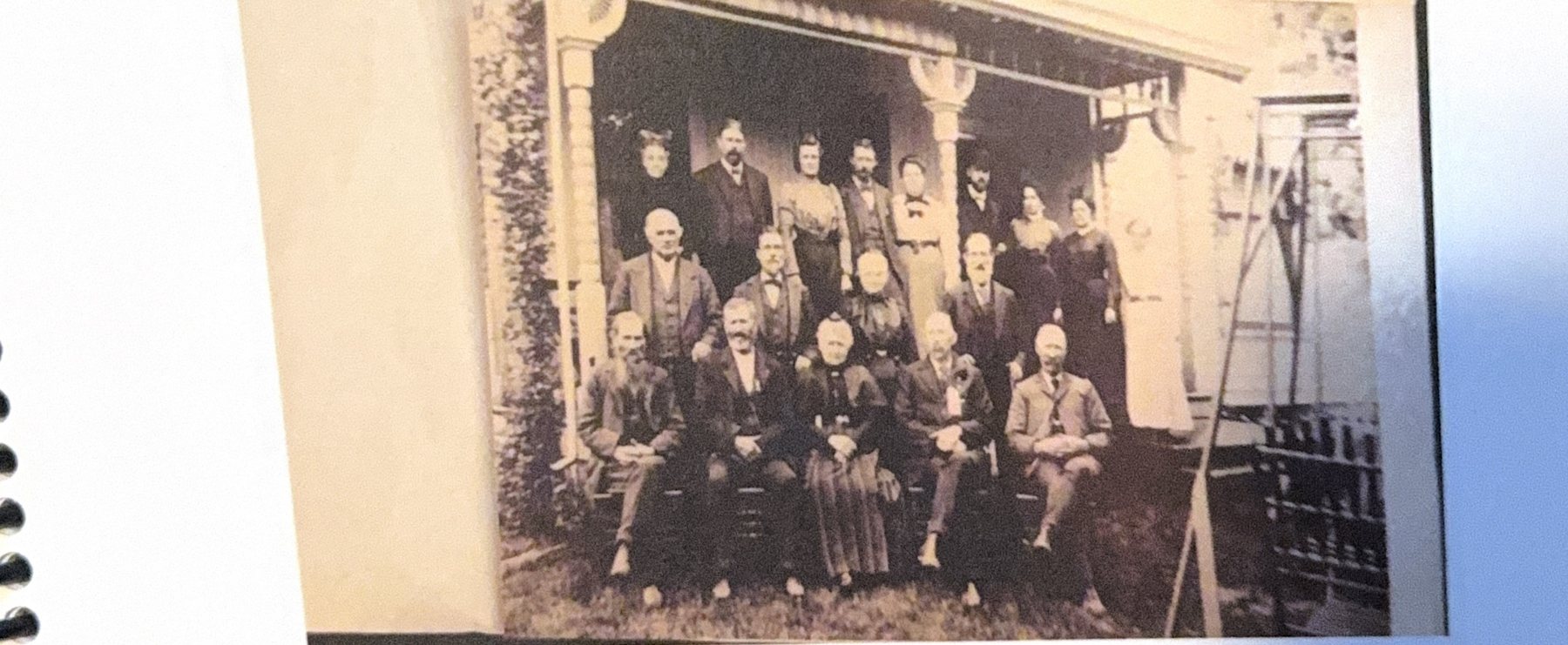
The Civil War divided this family the way it divided the country: of John's seven children, Daniel and one of Daniel's sons wore Confederate gray, while Reuben and Henry wore Union blue — brothers, in the same family, on opposite sides. As the memoir that first recorded this puts it: "we can particularly relate to families divided by politics."
Parents
- John Krotzer 1790–1864
- Anna Mary Rime b. 1784–?
Siblings
- Phillip Krotzer b. 1811
- Daniel Krotzer b. 1813
- Jacob Krotzer b. 1817
- Julia Krotzer b. 1820
- Reuben Krotzer b. 1826
- William Krotzer b. 1829
Wife #1
- Margaret Hillard(y) 1 Sept 1825–20 Nov 1869
Children
- Cora Krotzer (died in infancy)
- Priscilla Krotzer 1858–1942
- Mary “Mamie” Krotzer 1860–1941
- Jane Krotzer
- Alice Krotzer 1863–1911
- Milton Stanley KrotzerBorn Clarion, Pennsylvania, Apr 1868Died Winchester, Tennessee 19 Dec 1945
Wife #2
- Rebecca Zerba 20 Mar 1840–4 Jul 1874
Children
- Ellis Krotzer (died in infancy)
Wife #3
- Mary Francis George 25 Jul 1851–23 May 1901
Children
- Wilbur Krotzer
- Roy Krotzer
- Maggie Krotzer
- Ida Krotzer
- Frank Krotzer
- Henry Krotzer
- Florence Krotzer
Served Company F, 67th Pennsylvania Infantry, from 15 September 1862 to 14 July 1865 — essentially the entire war — while his brother Daniel and a nephew wore Confederate gray. His service included Fredericksburg, the Wilderness, and the Battle of Monocacy in July 1864, where a Union force of 5,800 was outnumbered nearly three to one by Confederate General Jubal Early's 14,000 troops. The Union side took heavier relative losses — but the delay it cost Early is credited with buying Washington, D.C. the time it needed, earning Monocacy its nickname, "the battle that saved Washington." Henry's commanding officer there was General Lew Wallace, who later wrote Ben-Hur.
After the war, Henry relocated the family south to Tennessee, where southern relatives reportedly called him a "carpetbagger." He worked as a carpenter as well as a farmer — the intricate woodworking of a historic Winchester house known as Hundred Oaks is said to survive as evidence of his craft. He is also where the family's saw tradition begins: he left behind a saw with his own initials carved into the handle, and every generation since has added their own — see The Saw.
A powder horn also survives, kept with the saw and labeled with his name and this exact birthdate by his great-great-grandson Steven — see The Powder Horn.
Henry died in Winchester, Tennessee. A typed caption in the family scrapbook, tucked beside his portrait, traces the line down by hand: "He was the father of Milton, the Grandfather of Duran, the Great Grandfather of Robert, the Great, great grandfather of Suzanne & Steven... and the Great, great, great grandfather of Ross, Solo, Frank, and Toni... five generations & 129 years later."
Parents
- Henry J. Krotzer 1833–1909
- Margaret Hillard(y) 1825–1869
Siblings
- Cora Krotzer (died in infancy)
- Priscilla Krotzer 1858–1942
- Mary “Mamie” Krotzer 1860–1941
- Jane Krotzer
- Alice Krotzer 1863–1911
- Half-siblings: Ellis (died in infancy); Wilbur, Roy, Maggie, Ida, Frank, Henry, Florence
Wife
- Ida Weidner ?–1892 (per the family chart; see below)
Children
- First child, name unknown (died in infancy)
- Duran Albert Krotzer 1893–1956
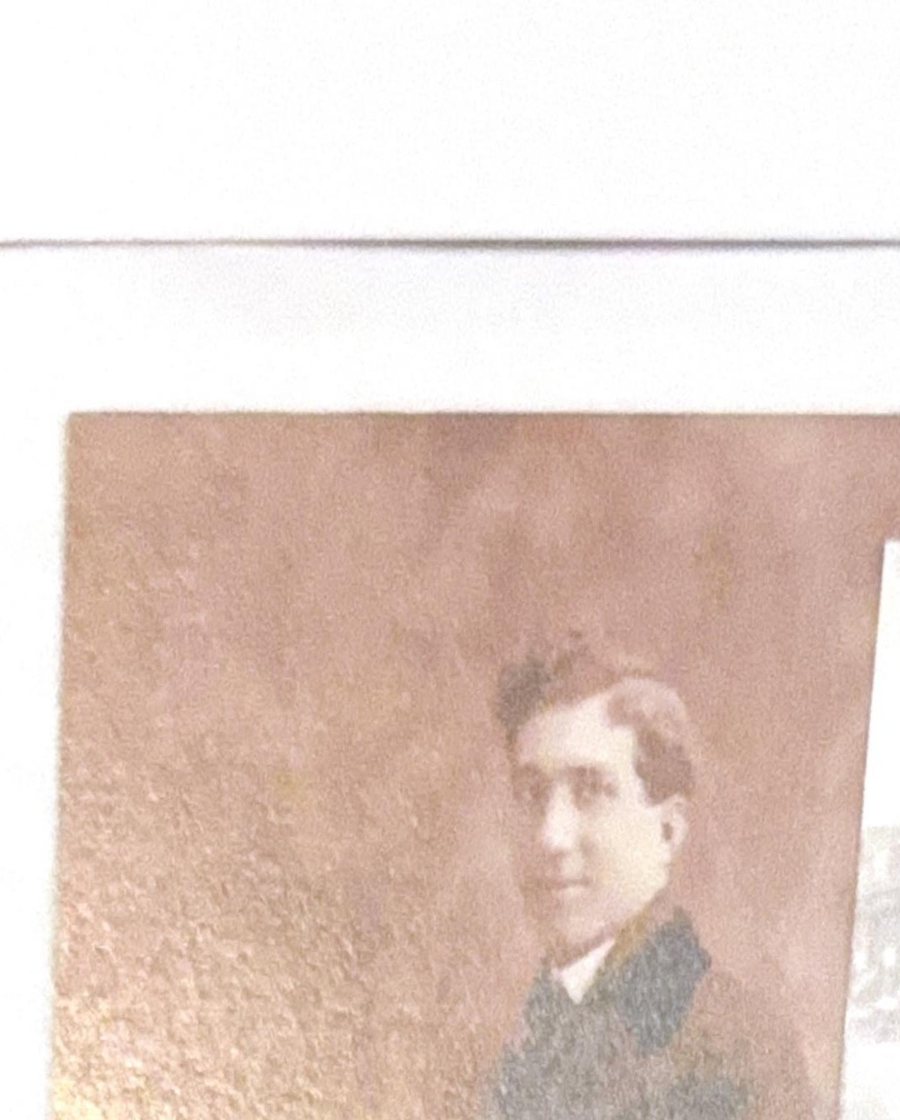
Born in Clarion County, Pennsylvania, the youngest of Henry J. Krotzer's six children with his first wife, Margaret Hillard. Married Ida Weidner.
Milton and Ida's first child died in infancy; Ida herself died delivering their second, Duran — by family tradition, though the chart that documents Ida's 1892 death and Duran's 1893 birth doesn't quite agree with itself on the timing. By the family's own account, "Milton seems to have been missing in action for his son's parenting" afterward — he left his only son to be raised instead by his own sister, Mary "Mamie" Krotzer, a spinster who raised Duran on "a garden, one cow, chickens, and a glorious grape arbor."
His grandson Robert Keith Krotzer remembered Milton as a "short, dignified man" who welcomed him graciously when Robert, still a teenager, took a solo bus ride south to investigate his southern roots. Milton later honored Robert by making him the beneficiary of his life insurance policy. One family photograph of Milton on a porch carries a wry caption: "Milton looks a bit frightening in this picture. Thank God for suspenders!"
A 22-page document titled "Memories of Ruth Krotzer," by Milton's half-sister Ruth, is referenced in the family's research but hasn't yet turned up in the material reviewed for this site. Died in Winchester, Tennessee.
Parents
- Milton Stanley Krotzer 1868–1945
- Ida Weidner ?–1892
Siblings
- One older sibling, name unknown (died in infancy)
Wife
- Laura May Chitwood 4 May 1891–8 Mar 1953Married Chattanooga, 29 May 1916
Children
- Albert Ray Krotzer 1917–1990
- George Milton Krotzer 21 Sept 1919–8 Mar 1978
- Robert Keith KrotzerBorn Detroit, Michigan 9 Sept 1921Died Naperville, Illinois 23 Aug 2011
Raised by his aunt Mary "Mamie" Krotzer after his own mother, Ida Weidner, died delivering him — or so the family's own account has always had it, though the clearest surviving copy of the family chart records Ida's death as 1892, a year before Duran's own recorded birth date. Neither figure has a stronger claim than the other. Described in the family memoir as "a Tom Sawyer like character," happily raised with "a garden, one cow, chickens, and a glorious grape arbor" — "not the student type," he left home early to travel.
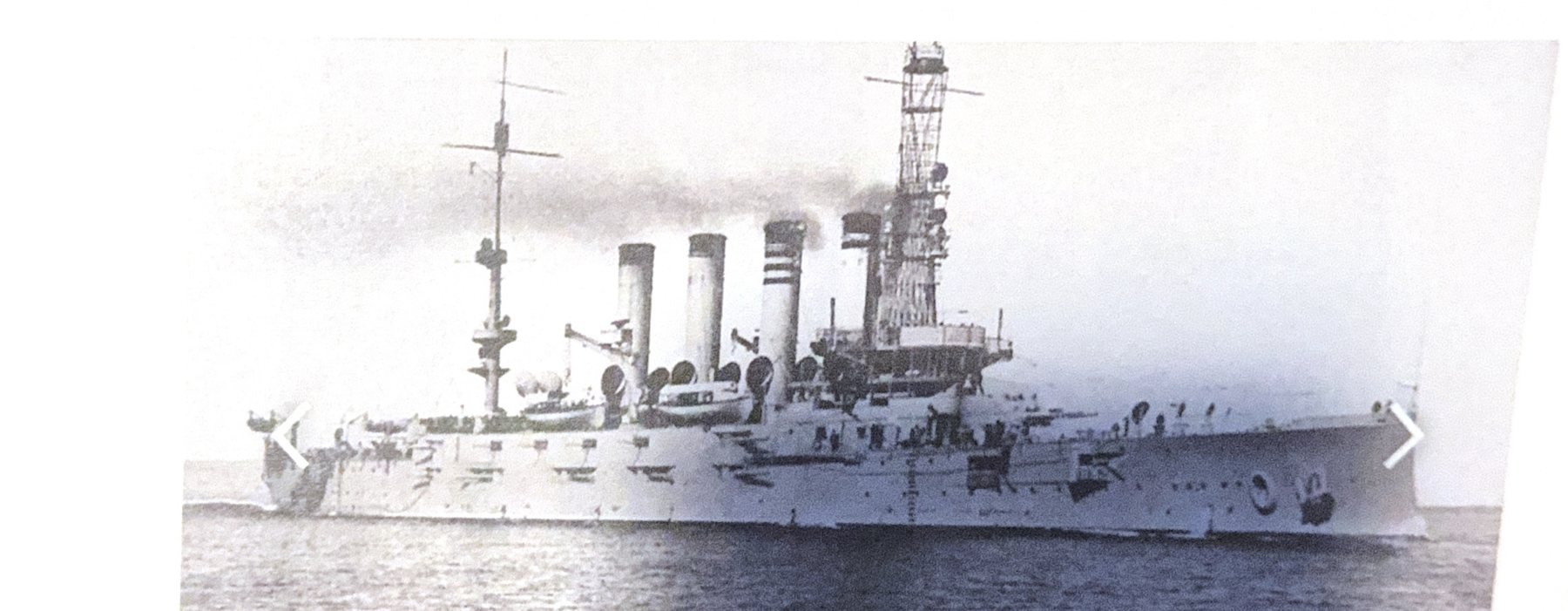
Joined the U.S. Navy around 1911, serving aboard the armored cruiser USS Montana. The ship was involved in the 1913 Balkan War, and in 1919 made six trips repatriating American "Doughboys" home from France after World War I — possibly, by family speculation, including a member of Laura Chitwood's own family. Duran was also a Freemason, a member of Metropolitan Lodge No. 319, F. & A.M.
After discharge, married Laura May Chitwood in Chattanooga on 29 May 1916 — the marriage certificate shows Duran had already moved to Detroit by then. Laura came from a large, respected Southern family that predated the Revolution, with seven siblings and a family tradition of teaching; the family had ties to Sharp College in Winchester, Tennessee, founded 1851 as one of the first women's colleges to offer degrees equivalent to the men's colleges of the day. The Chitwoods freed their own slaves in the 1850s, sending them to Liberia — and Laura's own great-grandfather fought for the Union in the Civil War despite being from the South. The extended Chitwood/Eden family claims kinship, unverified, with John Hancock, Francis Scott Key, and Anthony Eden of Great Britain. Marion Eden, an uncle of Robert's on the Chitwood side, was on the faculty and coached football at Tusculum College; he kept in touch with the family, visited them at their home in Michigan, and lent his cabin to Robert and Penny for their honeymoon. Robert's cousin Sharon Doubiago became a nationally recognized poet and writer; letters between her and Robert survive.
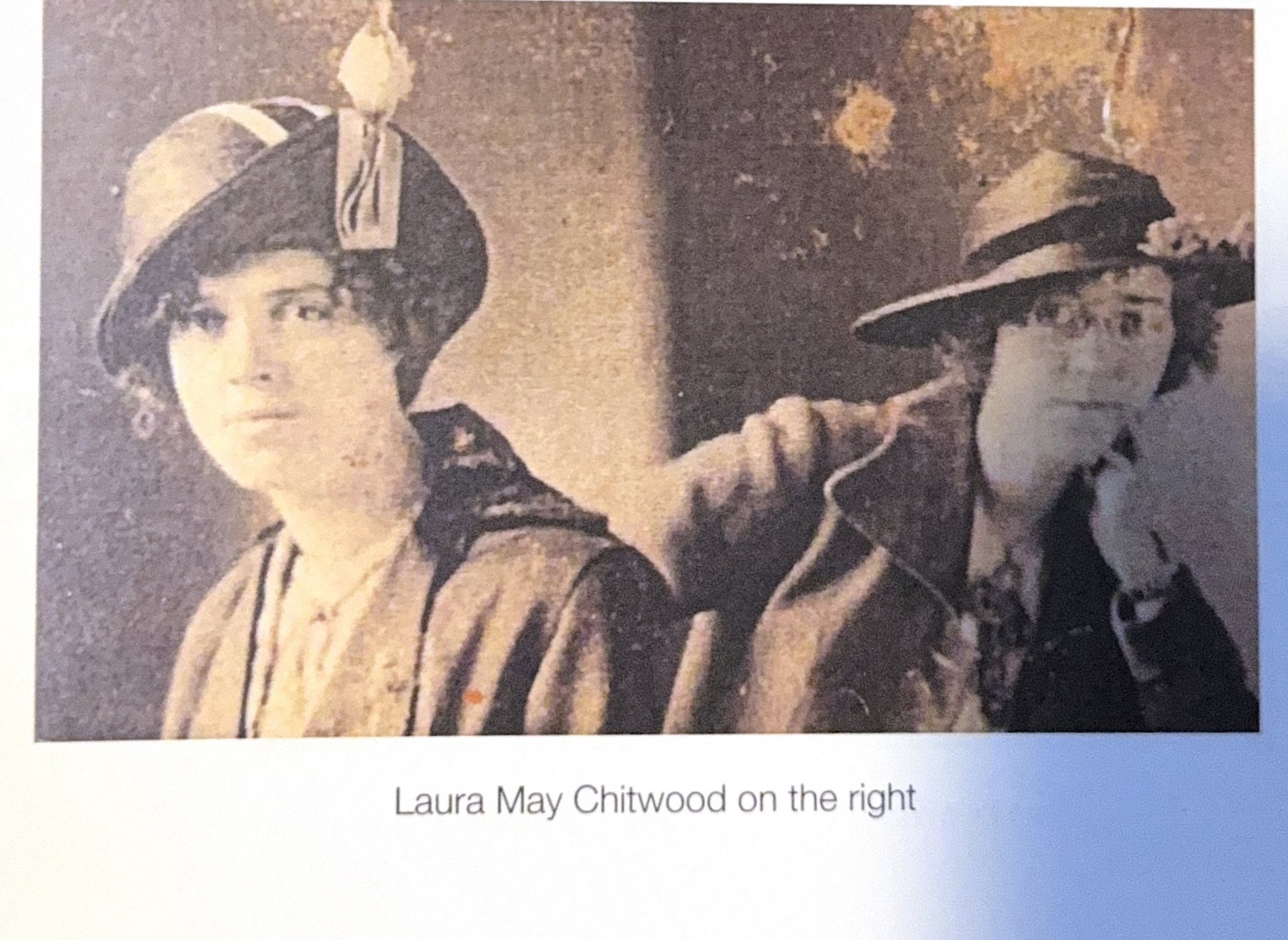
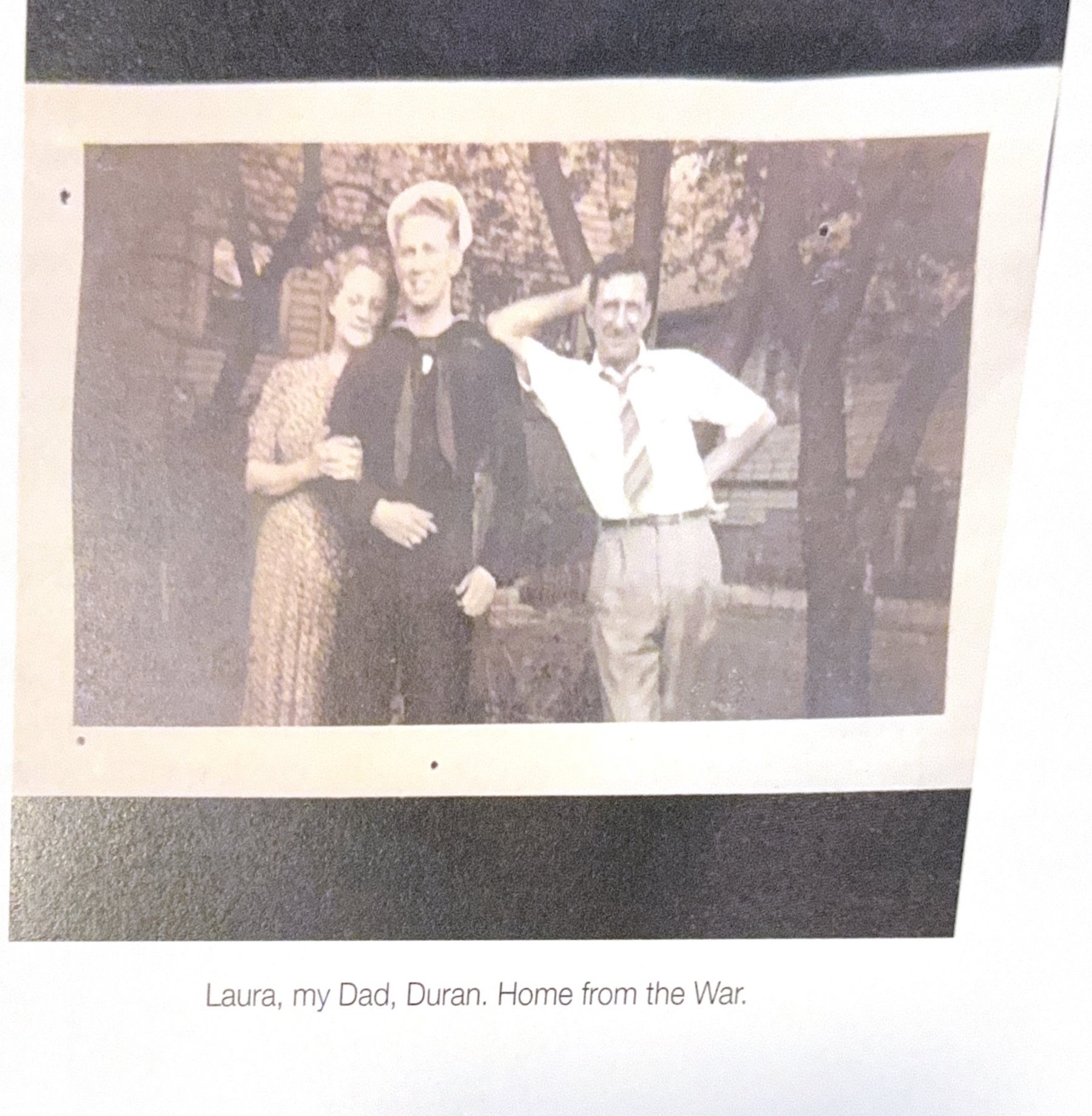
Duran and Laura lived in a two-bedroom, coal-heated house in downtown Detroit, in a Polish and Italian neighborhood near Hamtramck. Duran worked as a tool-and-die tradesman at the Dodge and later Chrysler plants, and — according to his son Steven — was fired from Chrysler at the height of the Depression for union organizing; he was known as a good public speaker, with a reputation as "a ladies' man."
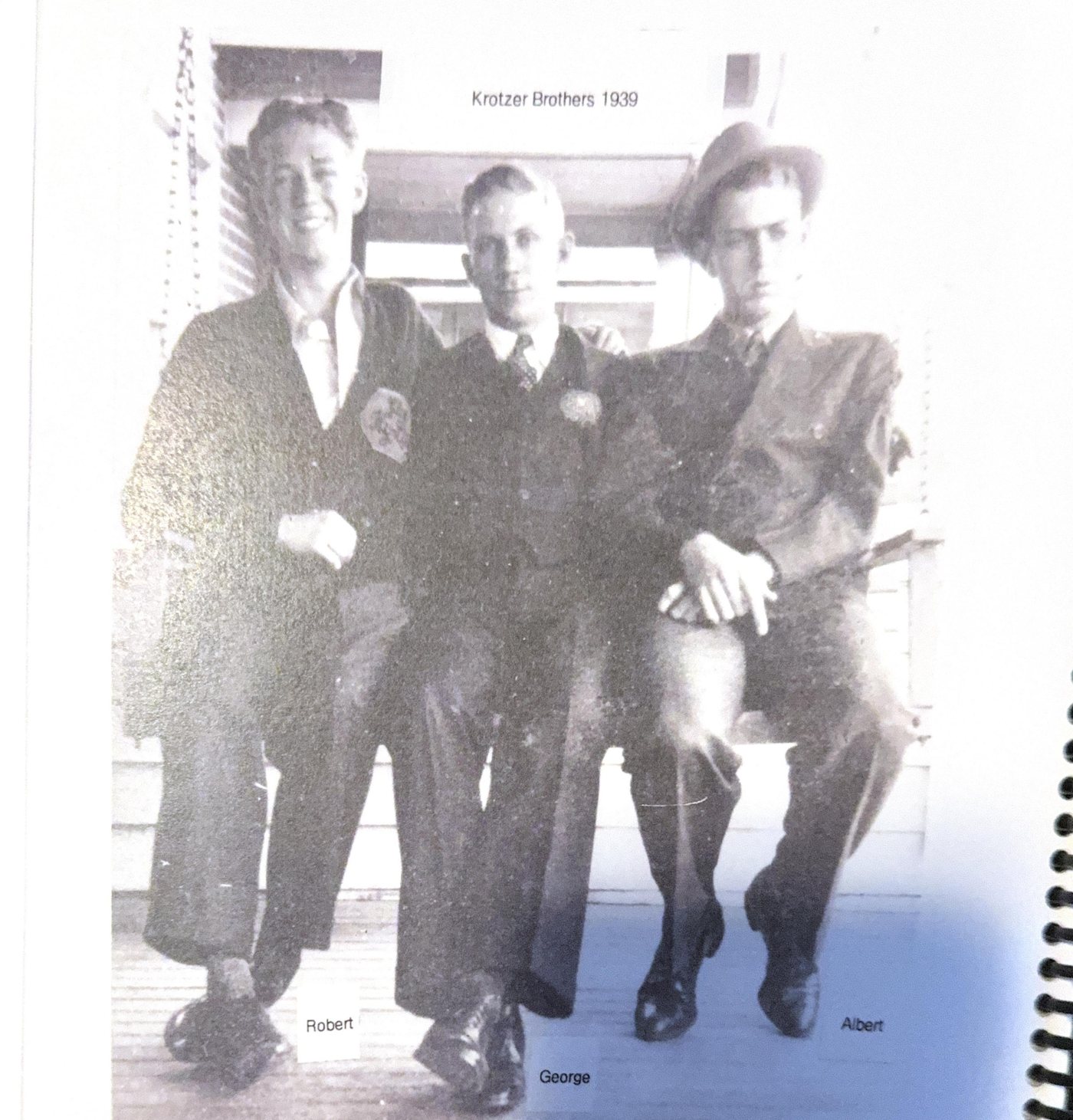
Albert Ray married Xenia Kitchen; a daughter, Jill Krotzer Pletz. George Milton followed his father into the Navy; married Lottie Marchewka; children James Robert, Diane, Frances Lee, Frank Duran, and Albert Fred.
Parents
- Duran Albert Krotzer 1893–1956
- Laura May Chitwood 1891–1953
Siblings
- Albert Ray Krotzer 1917–1990
- George Milton Krotzer 1919–1978
Wife
- Christine “Penny” Zurawka 3 Mar 1923–23 Apr 2008Married 7 September 1946
Children
- Suzanne Christine Krotzer Fleming
- Steven Scott KrotzerBorn Highland Park, Michigan
Grew up in Detroit alongside his brothers Albert Ray and George Milton, in a modest house with no central heating or basement, in a neighborhood that was mostly Polish and Italian — Detroit's population tripled between 1919 and 1930, three-quarters of it immigrants or their children. He attended Pershing High School, where his friends formed a social club called "the Hi-Lites"; a classmate, Edwin Zurawka, eventually introduced him to his own younger sister, Christine "Penny" — Robert's future wife, to whom, in his son's words, "he remained loyal and supportive to the bitter end."
Graduating into the Depression-era job market, he was promised a trade position at Ternstedt — until it went to the foreman's son instead. Rather distraught, he walked straight from that disappointment into a Navy recruiting office and signed on for six years. It was 1939, two years before the United States entered the war. His first ship was the seaplane tender USS Albemarle, stationed on the East Coast; he was on shore leave at a Norfolk movie house one evening when the film stopped, the lights came up, and every serviceman in the theater was ordered to report to his post — Pearl Harbor had just been attacked.
By 1942 he had volunteered for submarine duty as a Pharmacist's Mate aboard the USS Pilotfish, training as a medical corpsman at the Naval Hospital in Balboa Park, San Diego. He was the only medical presence aboard a diesel submarine at war in the Pacific, and carried step-by-step written instructions for performing an appendectomy at sea, on the reasoning — his own — that "it won't rain if you carry an umbrella." His shipmates called him "Doc" for the rest of his life, and he kept a newsletter connecting his old Pilotfish crewmates well into his eighties, "until there were none left." The Silent Service lost roughly one submarine crew in five during the war; the Pilotfish ran silent under Japanese depth charges more than once, and at times patrolled alongside two other boats as a "wolfpack" — a minor flaw in its own propeller shaft occasionally gave off a hum his family's account says was "perceptible to a Japanese destroyer's sonar."
He was there for the end of it. His own account, in his son Steven's transcription:
"A submarine operates alone, mostly. We were escorted the last and first 4 or 5 hours into and out of port so that 'friendlies' would not attack us. After that we were alone…awfully alone…usually at far advanced spots to harass the enemy. So it was the day the war ended; alone off Honshu, the big Japanese island, on rescue duty for the bombers from Saipan and the fighter planes from Iwo Jima. We were assigned to Tokyo Bay with the fleet for the peace signing and I was on lookout when we saw them (the fleet) a couple of days later. Suddenly the horizon was filled with masts…like a picket fence. Hey, we weren't alone!…hooray for our side. The Pilotfish flew down between two lines of ships…flank speed…showing off, I guess…as horns blew all around. Soon other subs joined in and we all steamed into Tokyo Bay where McArthur signed the war's end aboard the USS Missouri. How can I forget that day?"
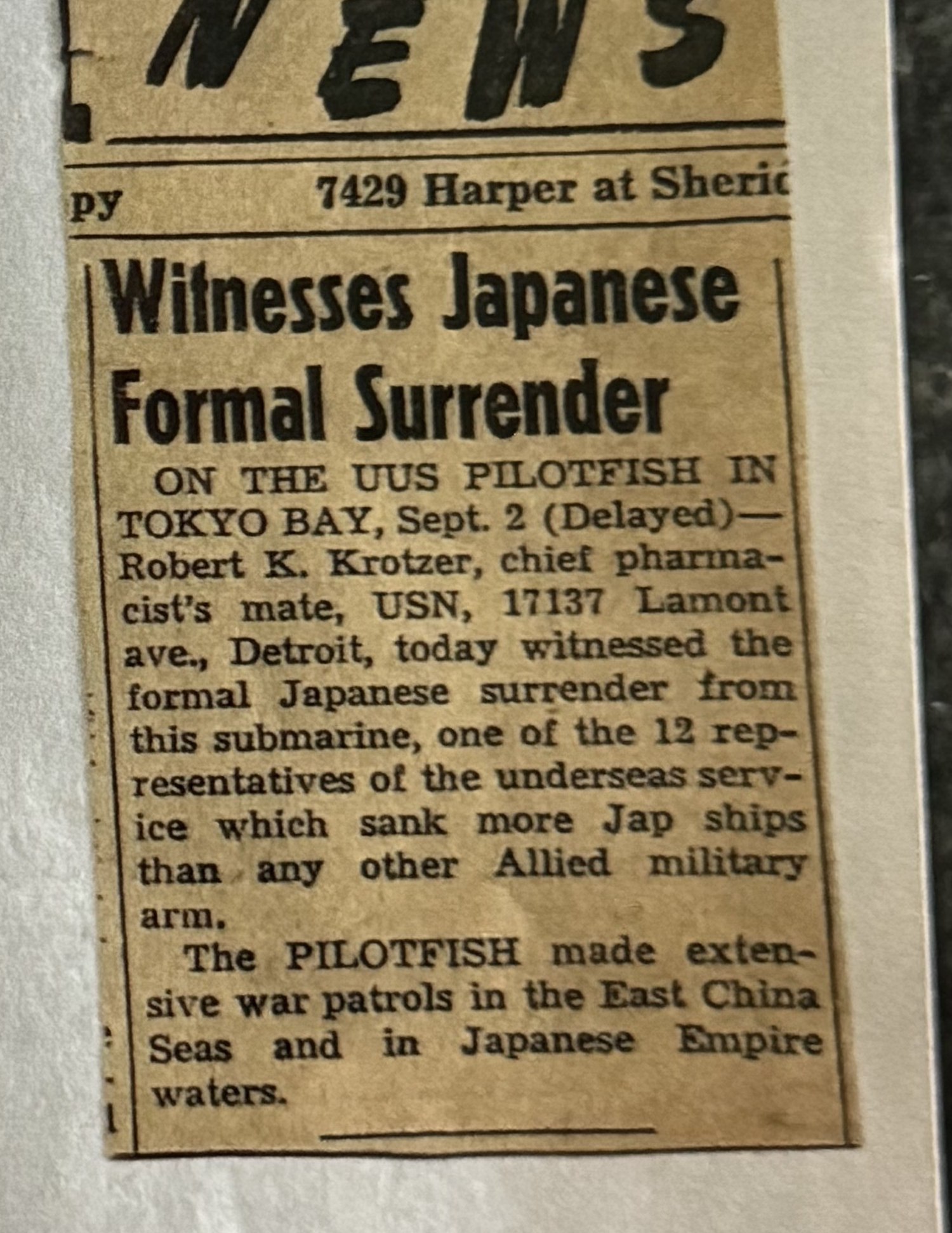
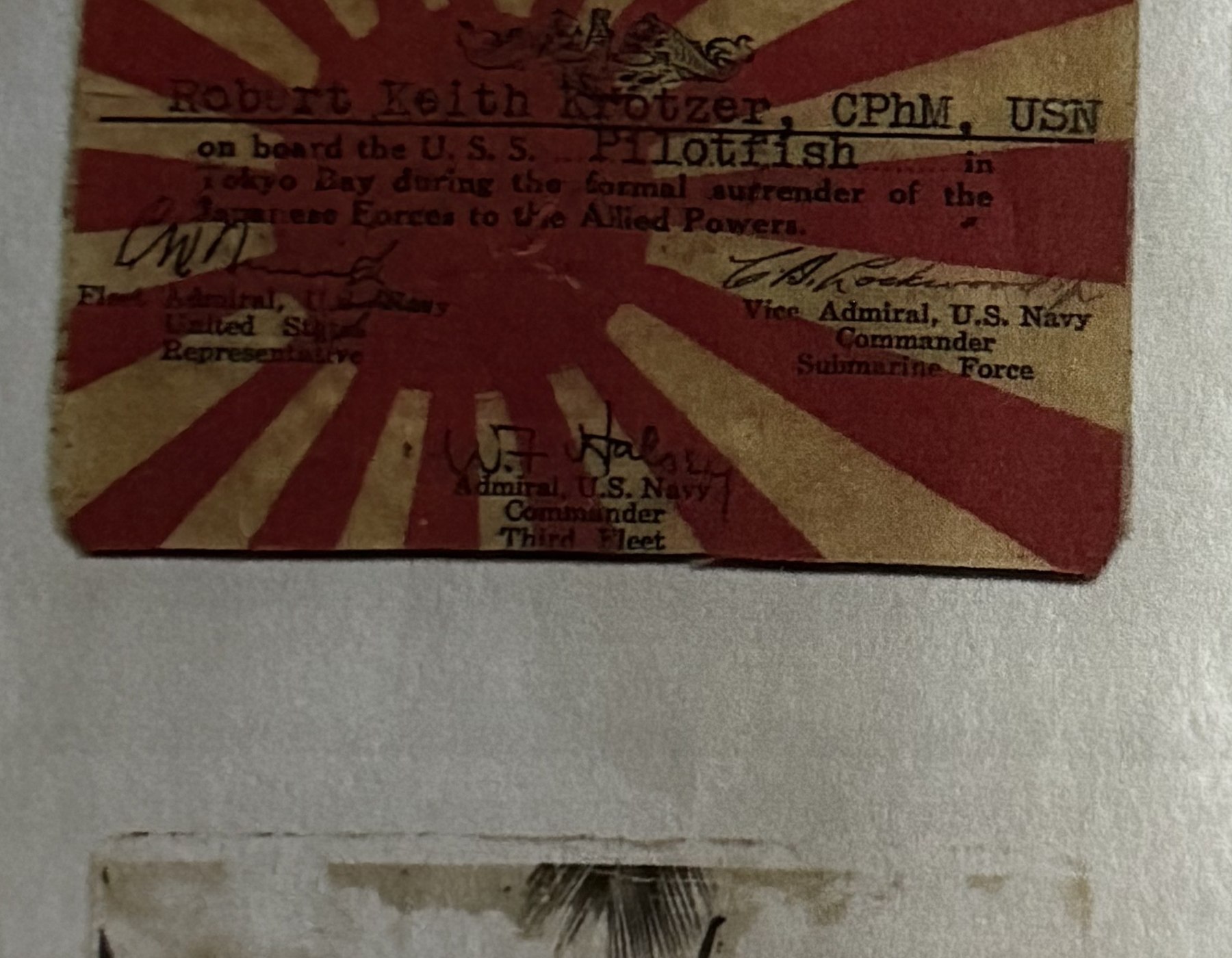
He carried a card in his wallet for the rest of his life certifying his presence aboard the Pilotfish for the formal Japanese surrender, signed by Fleet Admiral Chester Nimitz, Vice Admiral Charles Lockwood (commanding the submarine force), and Admiral William Halsey; a Detroit newspaper ran his name among the witnesses under the headline "Witnesses Japanese Formal Surrender." Decades later, treating a Japanese patient at the Mayo Clinic, his son Steven found himself describing that same day back to her.
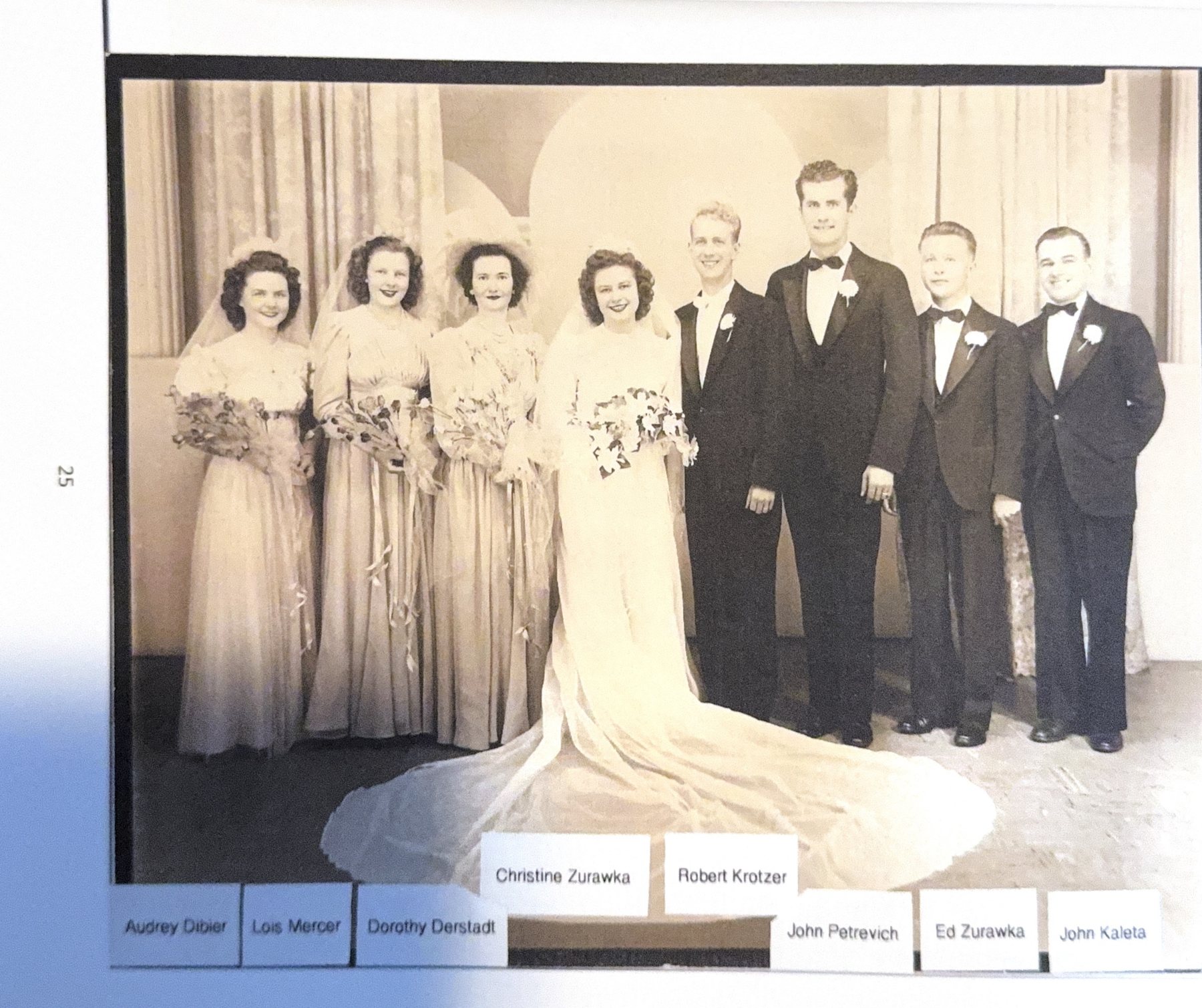
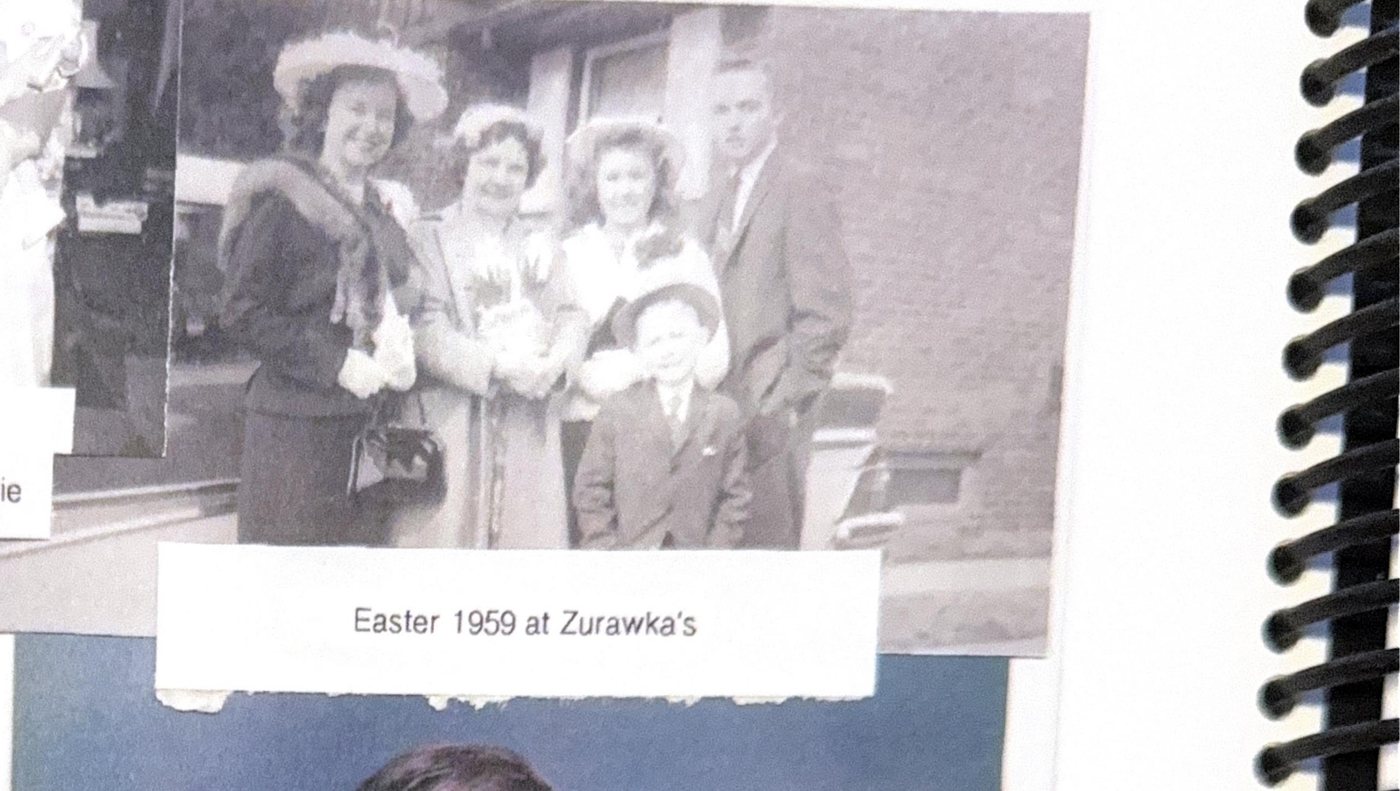
Married Christine "Penny" Zurawka on 7 September 1946, the year he converted to Catholicism to do it — the first time this German Protestant line joined a Catholic, Polish-Detroit family. Their wedding party: bridesmaids Audrey Dibier, Lois Mercer, and Dorothy Derstadt; groomsmen John Petrevich, Ed Zurawka (the bride's own brother), and John Kaleta. Penny trained at the Highland Park General nursing school and finished the war as a commissioned Navy ensign at Great Lakes Naval Base — technically outranking, on paper, the enlisted chief petty officer she'd go on to marry, much to the amusement of the guards who saluted her and sneered at him. Robert used the GI Bill for pharmacy school, becoming the first college-educated professional in this family's three-hundred-year American line; Penny joined the nursing staff at Highland Park General Hospital. Their first apartment was at 17137 Lamont, not far from Robert's own boyhood home on Davison Street, in the same Detroit neighborhood both families called home.
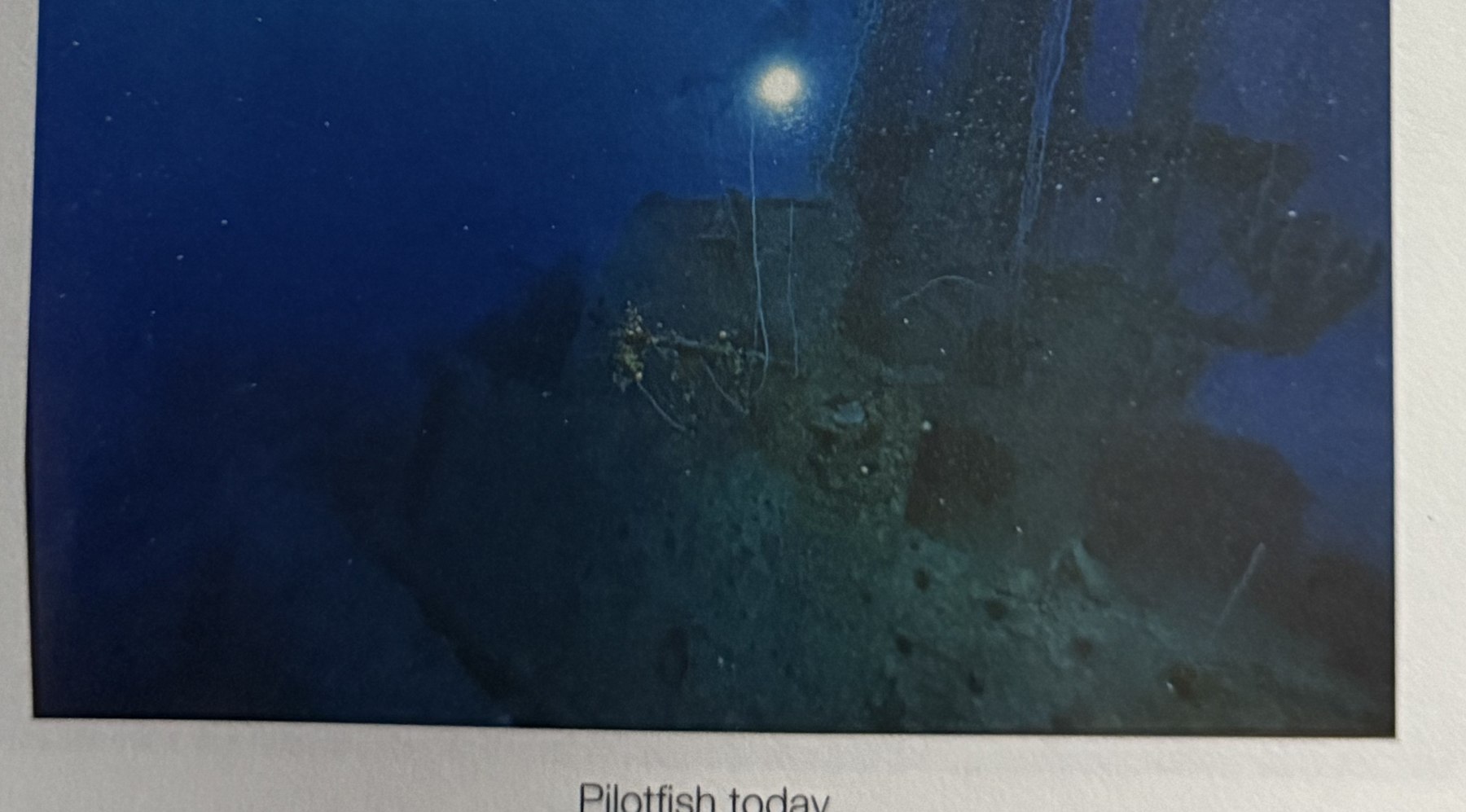
The Pilotfish didn't outlive its own crew's peacetime by much: the Navy expended it as a target ship in the postwar Bikini atomic bomb tests, and it now rests, sunk, at about 80 feet of water — a depth Robert liked to joke his old boat "was quite comfortable at."
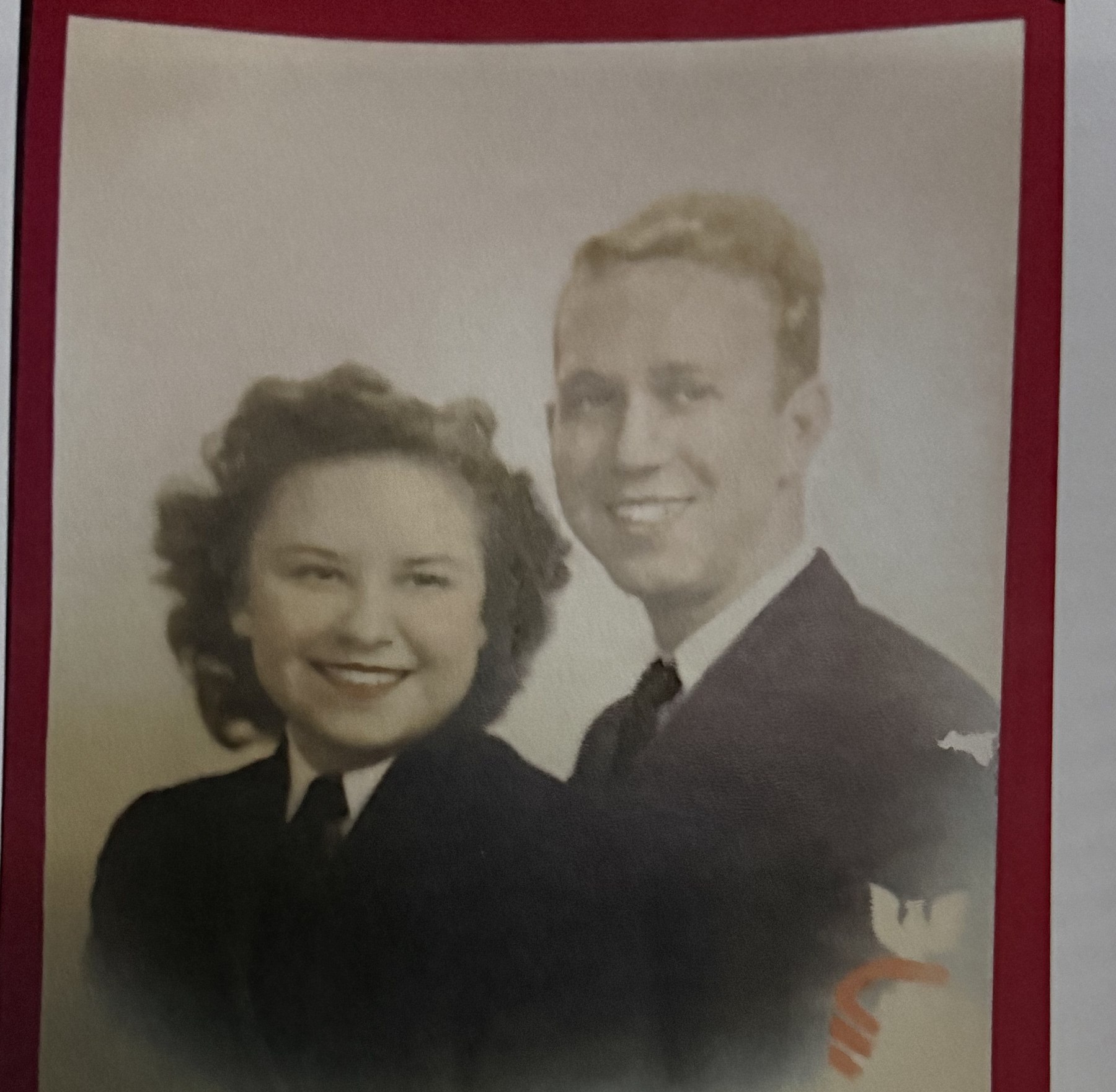
His two older brothers lived very different wars. Albert Ray, drafted first, later developed epilepsy — or, his nephew Steven has wondered, possibly what would now be recognized as chronic fatigue syndrome — wrote poetry, worked as a tool-and-die tradesman, and married Xenia Kitchen; their daughter was Jill. George Milton, "the black sheep" of the three, enlisted in the Navy and served aboard the USS Pennsylvania during WWII under a young ensign the family remembers as Johnny Carson; he died in his forties from the consequences of alcoholism. In their own boyhood it was George who watched over and protected his youngest brother, "Bobbie."
Suzanne married Richard Donald Fleming; their son Ross Richard Fleming married Catherine "Casey" Rodgers.
Parents
- Robert Keith Krotzer 1921–2011
- Christine “Penny” Zurawka 1923–2008
Siblings
- Suzanne Christine Krotzer Fleming
Wife
- Christine Palumbo
Children
- Solomon Scott KrotzerBorn Phoenix, Arizona
- Francisco Robert “Frank” Krotzer
- Antonia Christine “Toni” Krotzer
Born in Highland Park, Michigan. Physician. Co-wrote Generations: The Krotzer Journey with his sister Suzanne, and drove the 2018 research with the Northampton County Historical & Genealogical Society that settled which of three Philip Kratzers this family descends from.
Deeper dive to follow.
Parents
- Steven Scott Krotzer
- Christine Palumbo
Siblings
- Francisco Robert “Frank” Krotzer
- Antonia Christine “Toni” Krotzer
Wife
- Laura Mary Pasqualone
Children
- Domenic Steven KrotzerBorn Phoenix, Arizona
- Lucy Rose KrotzerBorn Phoenix, Arizona
Born in Phoenix, Arizona. Keeper of the saw and the powder horn — see The Saw — and compiler of this site.
Deeper dive to follow.
Parents
- Solomon Scott Krotzer
- Laura Mary Pasqualone
Siblings
- Lucy Rose KrotzerBorn Phoenix, Arizona
Wife
- —
Children
- —
Born in Phoenix, Arizona. Named to inherit the saw — see The Saw.